The 6 Pillars of a Complete Cross-Connection Control Program
FLO by HAC . . 2 min read
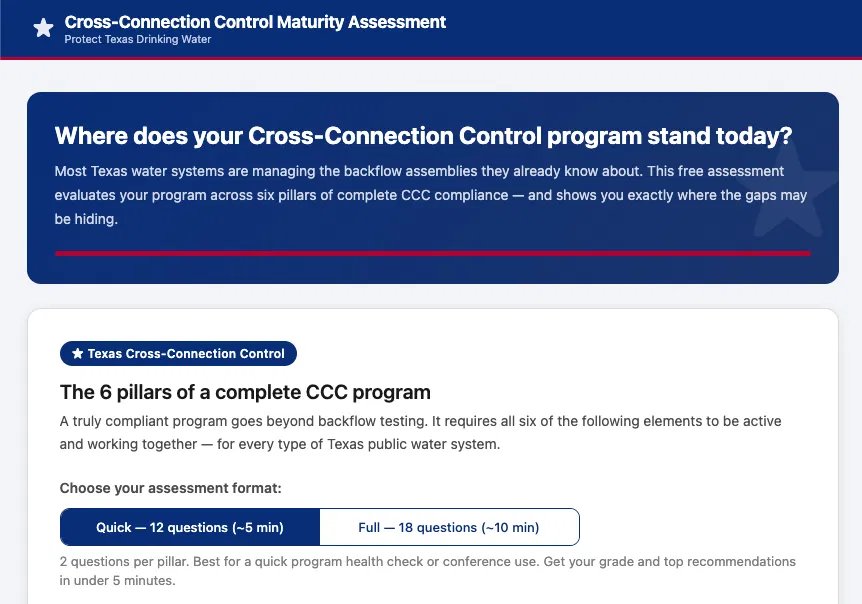
Most Texas water systems are managing the backflow assemblies they already know about. That is not the same as having a complete program. This post introduces the six pillars every Cross-Connection Control program needs, and the free tool we built to help you see where yours stands.

If you run a Cross-Connection Control program in Texas, you already know the core obligation: keep contaminants from entering the public water supply through unprotected connections. What is less obvious is how many moving parts that actually requires.
We have spent 30-plus years helping Texas water systems, municipalities, MUDs, WSCs, WCIDs, PIDs, and SUDs alike, build and run these programs. Across that work, one pattern shows up again and again. A program can be doing testing well and still have serious blind spots elsewhere. Testing is the piece people see. It is not the whole program.
That is why we built the CCC Maturity Assessment around six pillars, not one.
The Six Pillars
Legal Foundation. An enforceable ordinance, customer service agreement, or tariff is the legal basis for everything else. Without it, you cannot require testing, mandate corrections, or take enforcement action.
Discovery. Every cross-connection hazard in your service area has to be identified and registered, not just the ones reported to you. Unregistered locations are invisible to your program.
Protection. Having a backflow prevention assembly installed is not enough. It has to be the correct type for the hazard level at that location, and that can change as land use changes.
Testing. This is the pillar most programs focus on, and for good reason. But testing only covers what is already in your database. If Discovery is incomplete, Testing is automatically incomplete too.
Remediation. A failed test is the beginning of a process, not the end of one. Every failure needs a corrective action, a timeframe, and a verified passing retest.
Inspection Continuity. Customer Service Inspections identify new hazards and verify protection adequacy between testing cycles. Without them scheduled and tracked, programs drift out of compliance quietly.
A program can pass every audit on paper and still have real gaps. The six pillars exist because compliance is not one task done well. It is six things working together.
Where Your Program Stands Today
Over the next six weeks, we will publish a deep dive on each pillar: what it actually requires, where programs typically fail, and what a stronger version of it looks like.
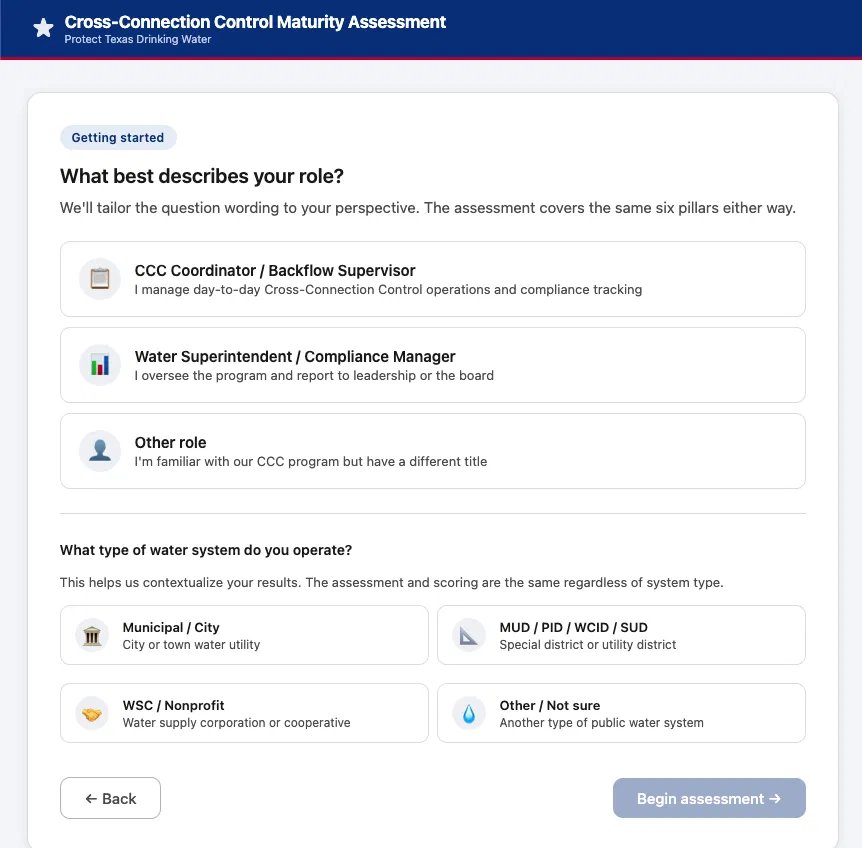
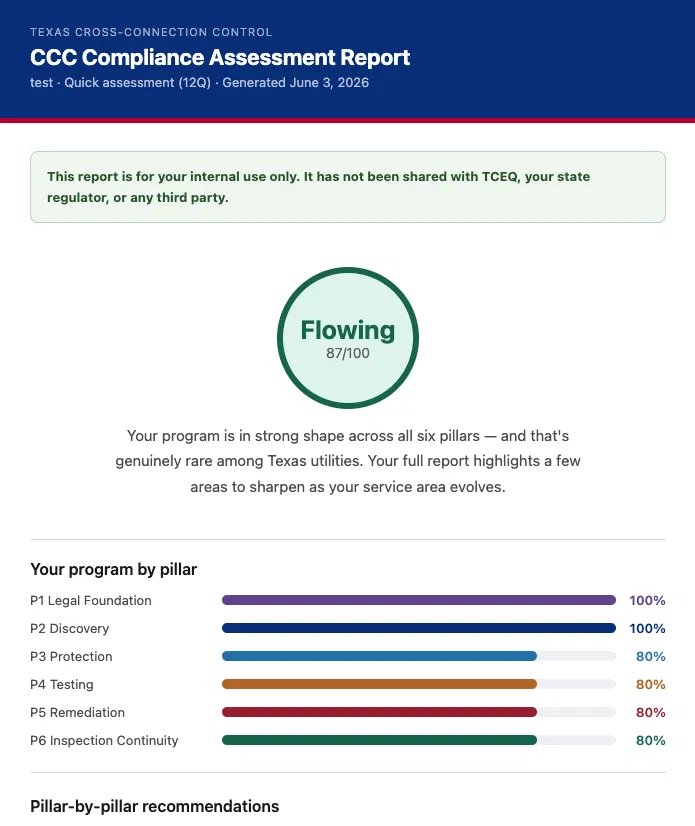
You do not have to wait for the series to find out where your own program stands. We built a free, confidential CCC Maturity Assessment that walks through all six pillars in about five to ten minutes and sends you a full report by email.
Take the free CCC Maturity Assessment today. It takes about five minutes.
Contact Us
Please reach out to us at info@hactexas.com or 972.823.8800 for questions or Cross-Connection Control program support.